Getting Started
Parts of the Guitar Explained for Beginners
A clear guide to guitar anatomy for new players — learn every part of a guitar, what it does, and why it matters.
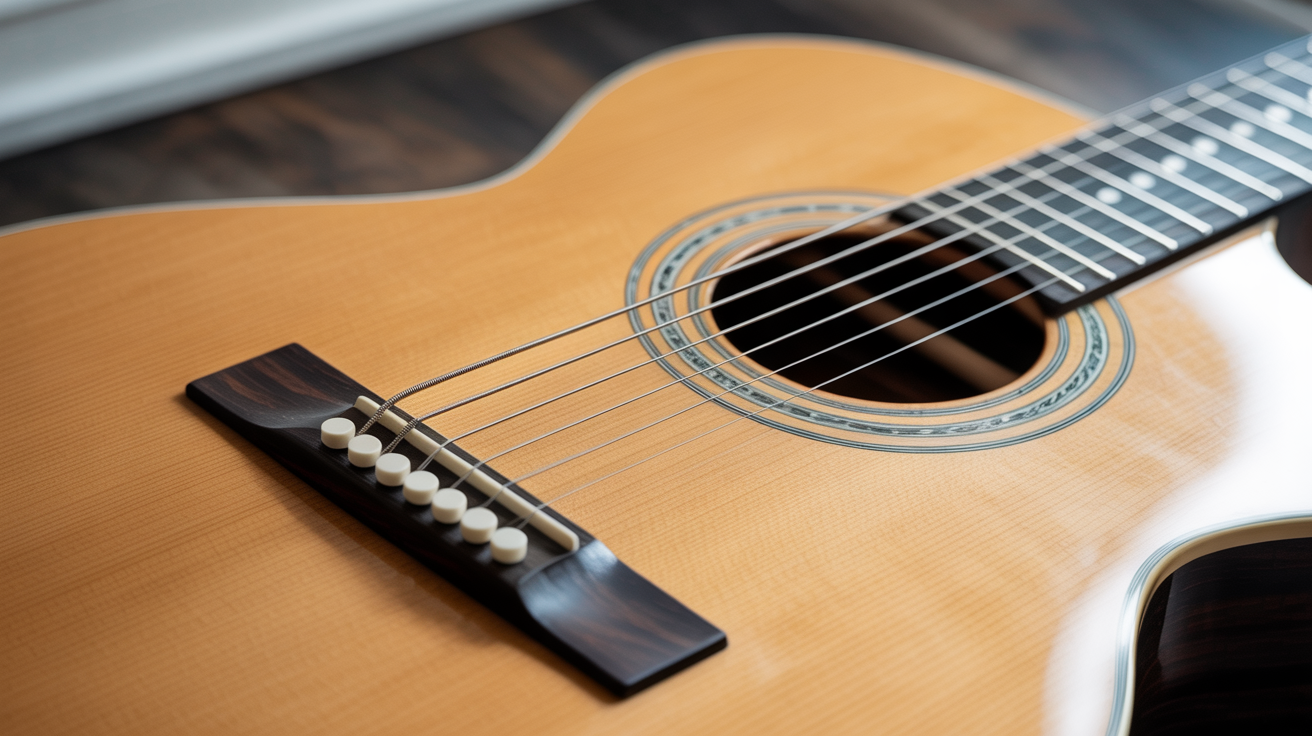
Picking up a guitar for the first time, you're faced with a surprisingly complex object. Knowing what each part is called and what it actually does will make every tutorial, lesson, and conversation with another player make a lot more sense. This guide walks you through guitar anatomy from top to bottom, with acoustic and electric differences called out along the way.
The Headstock: Where Tuning Happens
The headstock is the flat, often-decorative piece at the very top of the neck. Its main job is to hold the tuning machines (also called tuning pegs or tuners). Turning those small geared knobs tightens or loosens each string, raising or lowering its pitch.
On most acoustic guitars, the headstock is solid and the tuning pegs point straight back. On classical guitars, the headstock is slotted open and the rollers sit sideways. Electric guitars vary quite a bit: Fender-style headstocks have all six tuners along one side, while Gibson-style headstocks have three on each side.
The nut sits right where the headstock meets the neck. It's a small grooved bar, usually made from bone, plastic, or synthetic material, with one slot per string. Those slots keep the strings correctly spaced and set how high the strings sit above the first fret. A badly cut nut is a surprisingly common cause of tuning problems and fret buzz on entry-level guitars.
The Neck: Your Fretting Hand's Home
The neck is the long piece of wood your left hand (or right hand, if you play left-handed) wraps around. It connects the headstock to the body and carries the fretboard on its face.
Fretboard (Fingerboard)
The fretboard is the flat or slightly curved surface where you press strings down. It's almost always a separate piece of wood glued onto the neck: rosewood and maple are the most common, with pau ferro showing up as a rosewood substitute on some newer instruments. The wood type affects feel more than sound, so don't overthink it early on.
Frets
Frets are the thin metal strips embedded across the fretboard at precise intervals. Pressing a string behind (toward the nut from) a fret produces a specific note. The frets themselves are what contact the string, not your fingertip. Your finger just pushes the string down onto the fret. Keeping your fingers close to (but not on top of) the fret wire is one of the first technique fundamentals covered in any beginner roadmap for guitar players.
Fret Markers and Position Dots
Fret markers are inlaid dots or decorative shapes on the fretboard that help you find your place quickly. Most guitars have single dots at frets 3, 5, 7, 9, and 12, with a double dot at the 12th fret (which marks the octave). On the side of the neck, you'll find smaller side dots that let you track your position even when you can't see the face of the fretboard. You'll rely on these side dots more than you expect once you start playing standing up.
The Truss Rod
Inside the neck runs a metal rod that counteracts the tension of the strings. You never interact with it directly as a beginner, but knowing it exists is useful: that's why necks don't warp under string tension, and why a qualified tech can adjust neck relief if something feels wrong.
The Body: Sound and Sustain
The body is the large resonating chamber below the neck. Its shape, size, and construction vary enormously between acoustic and electric guitars, and those differences change how the instrument works at a fundamental level.
Acoustic Body: The Sound Hole
On an acoustic guitar, the body is a hollow wooden box. The sound hole (the round opening in the center of the top) lets the vibrating top project sound outward. The size and shape of the body (dreadnought, concert, parlor) affects volume and tonal character. A dreadnought is louder and bassier; a parlor is quieter but easier to hold.
Electric Body: Pickups
Electric guitars are typically solid (or semi-hollow) bodies with no sound hole. Instead, pickups sit mounted into the body beneath the strings. These are magnetic sensors that convert string vibration into an electrical signal, which then travels to an amplifier. Most electrics have two or three pickups, each positioned to capture a different tonal character (brighter near the bridge, warmer near the neck). A pickup selector switch lets you choose which pickup or combination is active.
The Bridge
The bridge anchors the strings at the body end and is one of the most important parts for both tone and playability.
On acoustic guitars, the bridge is a wooden block glued to the top. Strings pass through bridge pins (small plastic or bone pegs that hold the ball-ends of the strings in place) or, on some models, tie through the bridge itself.
On electric guitars, the bridge varies by design. Fixed bridges (like a tune-o-matic) are simple and stable. Tremolo bridges (like a Stratocaster vibrato or Floyd Rose) have a whammy bar that lets you bend pitch up and down. Tremolo bridges are harder to keep in tune and harder to restring, which is one reason many teachers suggest a fixed-bridge electric as a first instrument. The guide on choosing your first guitar without overspending covers this trade-off in detail.
The Saddle
The saddle sits on top of the bridge and is the last contact point before the string reaches the body. Like the nut, it has slots or contact points that set string spacing and height (called "action"). On acoustics, the saddle is usually a white strip of bone or plastic. On electrics, individual saddles are adjustable per string, which lets a tech dial in precise intonation (making sure the guitar plays in tune all the way up the neck, not just in the open position).
Quick Reference: Guitar Parts and What They Do
| Part | What It Does |
|---|---|
| Tuning pegs | Adjust string tension to tune each string |
| Nut | Spaces and holds strings at the headstock end |
| Neck | Connects headstock to body; your fretting hand works here |
| Fretboard | Playing surface where you press strings |
| Frets | Metal strips that divide the fretboard into semitones |
| Position dots | Visual markers to help you find fret locations quickly |
| Truss rod | Internal metal rod that keeps the neck straight |
| Sound hole | Opening on acoustics that projects resonating sound |
| Pickups | Magnetic sensors on electrics that capture string vibration |
| Bridge | Anchors strings at the body end |
| Bridge pins | Pegs that secure strings to an acoustic bridge |
| Saddle | Final string contact point; sets action and intonation |
| Pickup selector | Switch that chooses active pickup(s) on electric guitars |
Acoustic vs. Electric: The Core Structural Difference
The most important difference in guitar anatomy comes down to how the instrument produces sound. An acoustic guitar is a self-contained acoustic system: string vibration moves the top (the soundboard), the air inside the body resonates, and sound exits through the sound hole. No electricity required.
An electric guitar removes the acoustic resonance and replaces it with electromagnetic pickups. The body can be solid wood because it doesn't need to amplify anything on its own. That's also why electrics are generally easier to press down (lower action, lighter strings) and why they feel different to hold. Understanding this distinction helps you make a more informed decision when you're comparing options, which the acoustic vs. electric guide for beginners walks through in full.
Frequently Asked Questions
What are the three main parts of a guitar?
Most people break guitar anatomy into three regions: the headstock (tuners and nut), the neck (fretboard, frets, position markers), and the body (sound hole or pickups, bridge, saddle). Every other part fits within one of these three sections.
What is the purpose of the nut on a guitar?
The nut is a small grooved bar at the top of the neck, right where it meets the headstock. It keeps strings evenly spaced and sets the string height at the first fret. A worn or improperly cut nut can cause tuning instability and buzzing, so it matters more than its small size suggests.
Do electric and acoustic guitars have the same parts?
They share most structural elements: headstock, tuners, nut, neck, fretboard, frets, position dots, and bridge. The main difference is in the body. Acoustic guitars have a hollow body with a sound hole. Electric guitars have solid or semi-hollow bodies with magnetic pickups instead of a sound hole, plus controls like volume knobs, tone knobs, and a pickup selector switch.
What are fret markers for?
Fret markers are inlaid dots (or other shapes) on the fretboard at specific positions, usually frets 3, 5, 7, 9, and 12. They let you locate your position on the neck at a glance without having to count frets from the nut every time. The double dot at the 12th fret marks the point where the notes repeat an octave higher.
What is a saddle on a guitar?
The saddle is a small bar or set of individual contact points sitting on top of the bridge. Strings rest on the saddle before they're anchored to the bridge. It sets string height and helps determine intonation (whether the guitar plays in tune up and down the neck). On acoustics it's usually a single piece; on electrics each string often has its own adjustable saddle.