Getting Started
Acoustic vs Electric Guitar: Which Should a Beginner Start On?
Choosing acoustic vs electric guitar for beginners comes down to your goals and budget. Here's how to make the right call for your situation.
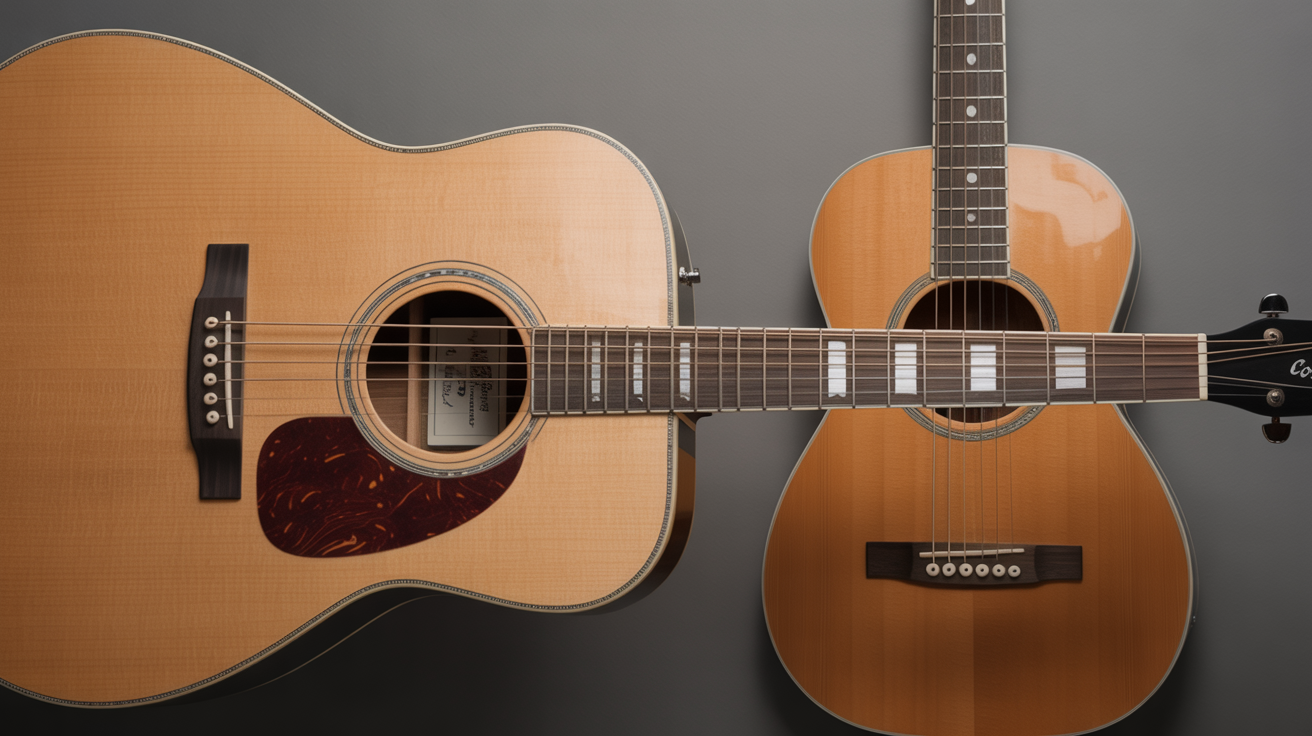
Picking your first guitar feels like it should be simple, but the acoustic-versus-electric question trips up almost every new player. The honest answer is that neither option is universally better for beginners, the right choice depends on what music you want to play, where you'll practice, and what your budget looks like.
That said, this isn't a coin-flip decision. There are real, practical differences between the two that will affect how your first few months of playing actually feel. This guide breaks those down so you can make a confident choice.
How Acoustic and Electric Guitars Actually Differ
Before comparing them as learning tools, it helps to understand what makes each type distinct.
An acoustic guitar is self-contained. It uses a hollow body to amplify string vibration into sound, which means you can pick it up and play anywhere without plugging anything in. Acoustic strings are typically heavier gauge and sit higher above the fretboard (what guitarists call "action"), which demands more finger strength and cleaner technique.
An electric guitar needs to run through an amplifier to produce its full sound. The body is usually solid, the strings are lighter, and the action is lower. On its own, it produces a quiet, thin buzz, you hear the real sound only when it's plugged in.
This difference in setup has downstream effects on cost, comfort, and how you'll practice day-to-day.
Acoustic vs Electric Guitar for Beginners: A Side-by-Side Look
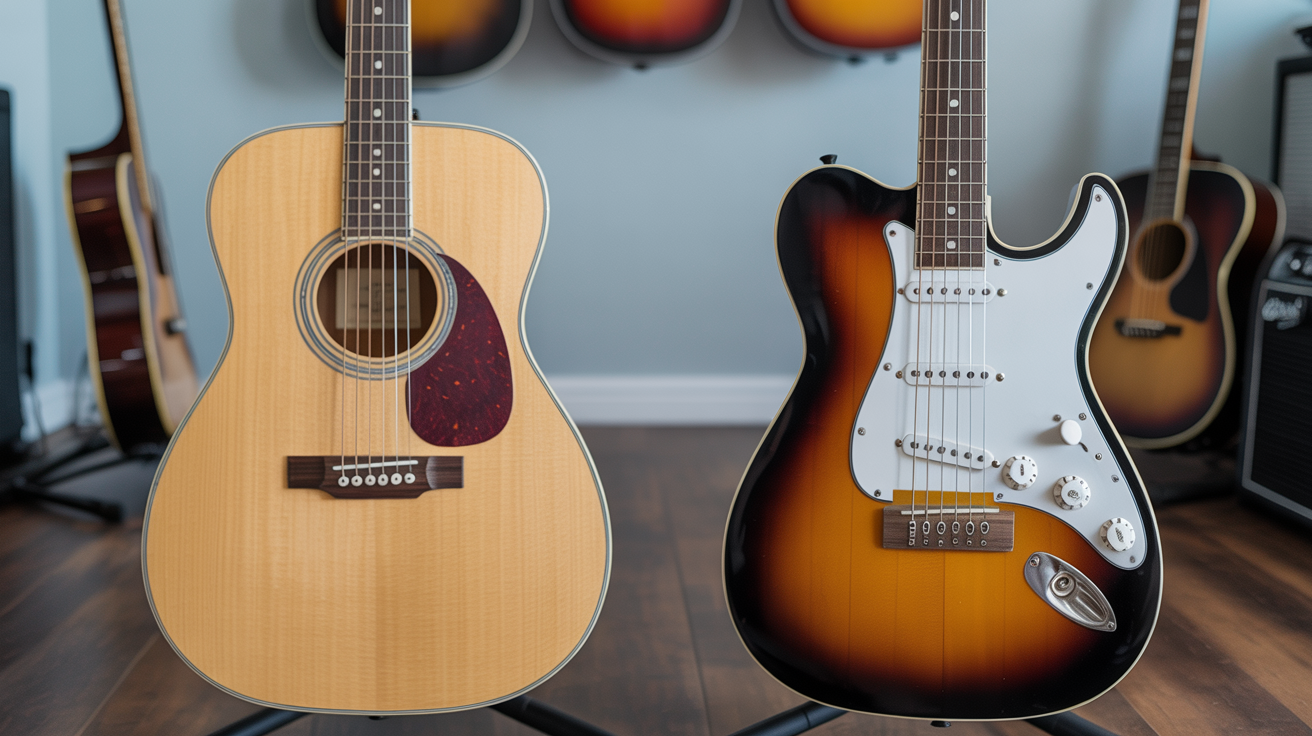
| Factor | Acoustic | Electric |
|---|---|---|
| Upfront cost | Guitar only | Guitar + amp + cable (at minimum) |
| String gauge | Heavier (harder to press) | Lighter (easier on fingers) |
| Action (string height) | Generally higher | Generally lower |
| Volume control | Limited, it's as loud as it is | Amp has a volume knob |
| Portability | High, no cables or gear needed | Lower, needs amp to hear properly |
| Genre fit | Folk, country, singer-songwriter, fingerpicking | Rock, blues, jazz, metal, pop |
| Maintenance | Simpler | More parts (pickups, electronics) |
The cost gap matters more than people expect. A decent beginner acoustic runs $150–$250 as a standalone purchase. A comparable electric setup (guitar, small amp, cable) typically lands at $250–$400 for the same quality level. That's not a dealbreaker, but it's worth factoring in before you decide.
The Case for Starting on Acoustic
The most common advice beginners hear is "start on acoustic," and there are genuinely good reasons for it.
Acoustic guitars are harder to play in a physical sense. The strings are stiffer, the action is higher, and pressing down cleanly requires real finger strength. Many teachers argue this builds better foundational technique, if you can play cleanly on an acoustic, switching to electric later feels effortless by comparison.
There's also the simplicity factor. You can keep an acoustic on a stand in your living room and pick it up for five minutes whenever the mood strikes. No amp, no cables, no fussing with knobs. For beginners who are still building the habit of practicing daily, removing every possible friction point helps.
Acoustic makes particular sense if you're drawn to folk, country, campfire-style playing, singer-songwriter material, or any music built around strumming and fingerpicking. If you've pictured yourself playing around a bonfire or accompanying your own singing, acoustic is almost certainly the right call.
One important note: "acoustic is harder, so it builds better technique" is true up to a point, but it's not a universal law. Struggling through physical pain because your fingers can't press the strings down is not good practice. If an acoustic is genuinely too hard on your hands in the first weeks, that's a real problem.
The Case for Starting on Electric
Electric guitar gets overlooked as a beginner instrument, but for a lot of players it's the smarter choice.
Lower action and lighter strings mean it's physically easier to form chords and produce clean notes from the start. For younger players, people with smaller hands, or anyone who finds acoustic strings painful, electric removes a major barrier. The early weeks of guitar are the highest dropout point for new learners, anything that makes the instrument less frustrating is a real advantage.
Electric also makes obvious sense if the music you want to play is electric. If your motivation for learning guitar comes from wanting to play rock, blues, or metal, forcing yourself through months of acoustic folk is a strange path. You'll stay more motivated practicing toward the sound you actually care about. Checking out your complete beginner's roadmap before you buy can help you clarify what direction you want to head first.
The amp volume knob is also quietly useful for people who live in apartments or have family members who'd prefer not to hear "Smoke on the Water" at 9 PM. A small practice amp can run at bedroom volume or even into headphones.
The downside is real: you need more gear and more money to get started. You also need somewhere to set up, since practicing through a phone speaker or without an amp defeats the purpose.
What About Playing Style and Genre?
Genre is probably the clearest deciding factor, so spend a minute being honest with yourself about it.
If you want to play: folk, country, acoustic pop, classical, or fingerstyle, start on acoustic.
If you want to play: rock, blues, metal, jazz, or anything that sounds like it came out of a guitar plugged into something, start on electric.
If you genuinely don't know yet, that's useful information too. A new player who's unsure about genre often does well starting acoustic, because acoustic builds habits (chord changes, rhythm, basic technique) that transfer cleanly to electric. The reverse is also true, but many beginners who start electric and later want to switch to acoustic find the physical adjustment harder than expected.
Budget Realities
Choosing your first guitar without overspending covers this in more depth, but a quick summary:
For acoustic, your all-in cost for a playable beginner guitar is $150–$250. Add a tuner ($15) and a few picks ($5) and you're playing.
For electric, budget $150–$200 for the guitar, $80–$150 for a small practice amp, and $10 for a cable. Some brands sell "starter packs" that bundle all three at a slight discount, they're a reasonable option if you want to keep it simple.
Neither option requires spending $500 to get a quality instrument. Cheap guitars have never been better than they are right now, and a $200 guitar from a reputable brand will get you through the first year or two without holding you back.
Getting to Know Your Instrument
Regardless of which type you choose, understanding the parts of the guitar makes setup, tuning, and troubleshooting much easier from day one. Knowing what the nut, saddle, and tuning pegs actually do helps you diagnose problems instead of just guessing.
Both acoustic and electric guitars share the same fundamental anatomy, neck, frets, headstock, body, even if the details differ. That shared knowledge transfers between instruments.
Frequently Asked Questions
Is acoustic guitar harder to learn than electric?
Physically, yes, in most cases. Acoustic strings require more finger pressure and the action (string height) tends to be higher. This can make chord shapes harder to hold down cleanly at first. Electric guitars are generally easier on the fingers in the early stages. That said, "harder" doesn't automatically mean "better for learning", struggling through unnecessary pain isn't good practice.
Should I learn on acoustic first if I want to play electric?
Not necessarily. If your goal is to play electric guitar, learning the style and feel of electric from the start makes sense. The foundational skills (chord shapes, scales, rhythm) transfer between instruments regardless of which you start on. You don't need to earn your electric guitar by suffering through acoustic first.
Can I learn the same things on both types of guitar?
The core fundamentals, chords, strumming, scales, music theory, apply equally to both. Where they diverge is in technique-specific skills: fingerpicking styles are more naturally developed on acoustic, while techniques like bending strings, using effects pedals, and palm muting are specific to electric. Most beginners don't hit those differences for months, so for the first few lessons it barely matters.
What if I want to play both acoustic and electric eventually?
Start with whichever type matches your current musical taste, and add the other later. Most guitarists own both at some point. The transition between them is manageable once you have a year or two of playing under your belt.
Do I need a good amp to start on electric?
You need some amp to hear the instrument properly, but you don't need an expensive one. A small 10–20 watt practice amp is fine for bedroom playing and learning. Practicing unplugged is possible, but you won't hear what you're actually doing, which makes it harder to improve.