Getting Started
Can You Teach Yourself Guitar? Self-Teaching vs Lessons
Yes, you can teach yourself guitar. Here's an honest look at what self-teaching gets right, where lessons help, and how to decide which path fits you.
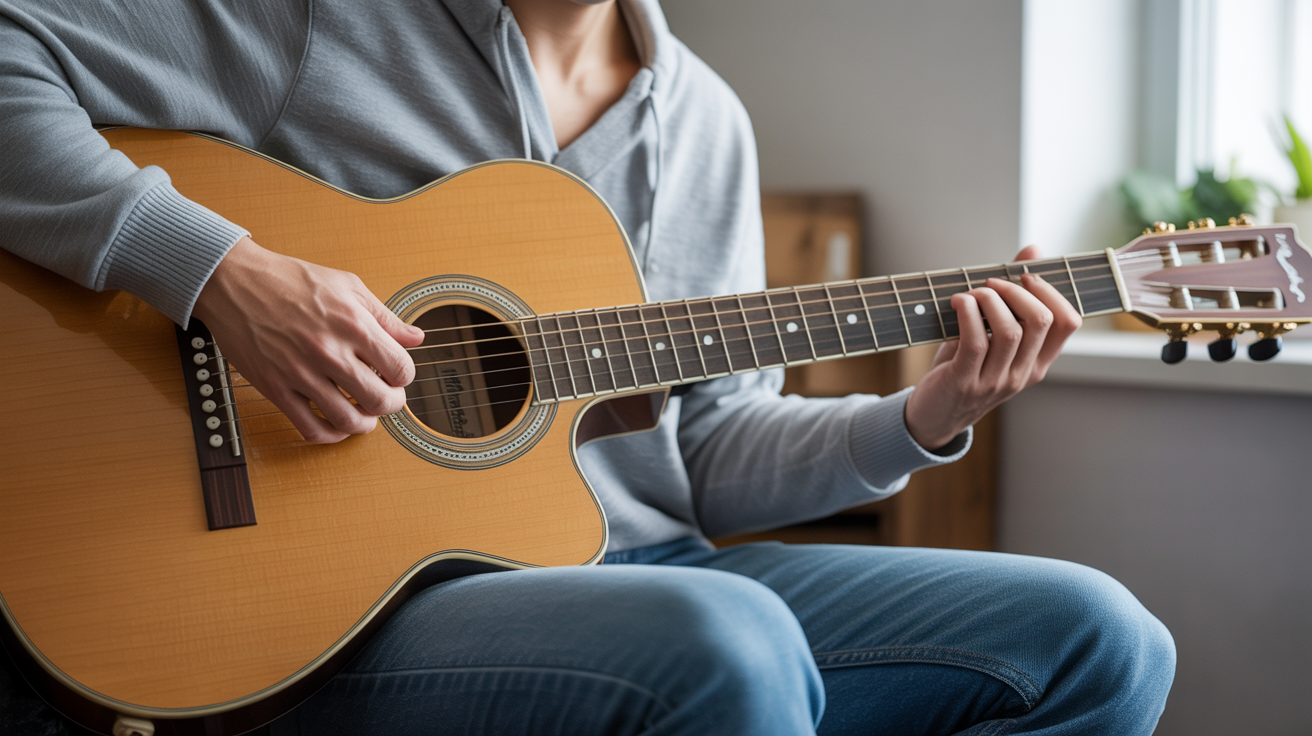
Yes, you can teach yourself guitar. Thousands of working musicians never had a single formal lesson. That said, the honest answer has a few layers to it, and knowing those layers will save you months of spinning your wheels.
At a Glance
- Self-teaching works, especially once you have the basics locked in: open chords, a slow strumming pattern, and tuning by ear.
- The hard part of self-teaching isn't playing, it's deciding what to work on next without a curriculum.
- Lessons earn their cost mainly in two places: catching bad habits early and diagnosing why you're stuck.
- A hybrid approach, self-study most weeks with occasional check-in lessons, gets most of the benefit of both at a fraction of the cost.
- Structured, focused practice (not just hours logged) is what research on skill acquisition consistently points to as the difference-maker.
- Short daily sessions beat long infrequent ones for building the muscle memory chord shapes require.
What Self-Teaching Actually Looks Like
Learning guitar without lessons means taking on two jobs at once: playing the instrument and deciding what to learn next. Neither job is impossible on your own, but the second one trips up a lot of beginners.
When you sit down to practice with no plan, it's easy to spend twenty minutes noodling on something that feels fun but doesn't build toward anything. A teacher's main value isn't secret knowledge. It's structure: they decide what you work on this week so you don't have to guess.
Self-taught guitarists who succeed tend to follow a clear sequence rather than jumping between random YouTube videos. They pick one resource and stick with it long enough to see progress before switching. That discipline is the real skill, and it's learnable.
This lines up with what skill-acquisition research actually shows. The concept of deliberate practice, developed from studying how experts across fields get good, holds that how you practice matters more than how many hours you log. The defining features are a well-defined goal, full attention, and a way to know whether you actually improved, not just repetition for its own sake. A self-taught guitarist who plays a chord change slowly and correctly fifty times is progressing faster than one who strums the same song sloppily for an hour.
Where Self-Teaching Works Well
Self-teaching has genuine advantages, not just as a budget compromise.
You control the pace. If a chord takes you three weeks instead of one, nobody is waiting on you. You can slow down, revisit, and repeat without any awkwardness.
You can focus on music you actually want to play. A teacher often has a curriculum. A self-taught player can spend week one on an open G chord because that's what the song they love needs.
Resources are genuinely good now. Free structured courses, chord diagrams, and video breakdowns at any skill level exist in real quantity. The information gap between lessons and self-study is much smaller than it was twenty years ago.
Self-teaching works especially well once you have the basics locked in. Getting your first four or five open chords clean, building a slow strumming pattern, and learning to tune by ear are all things a determined beginner can do without a teacher.
Check out our complete beginner's roadmap for a structured sequence you can follow on your own.
Where Lessons Have a Clear Edge
Lessons shine in two situations: catching bad habits early and getting unstuck fast.
Technique problems are hard to spot yourself. If your wrist is angled in a way that will cause pain later, or your thumb position is muting strings you want to ring, you often can't feel it because it feels normal to you. A teacher catches this in the first session. A self-taught player might not figure it out for a year, if at all.
When you're stuck, a teacher diagnoses the actual problem. Self-taught players often fix the wrong thing. They practice a chord change faster when the real issue is finger placement. A teacher watches you play for thirty seconds and usually knows exactly what's causing the problem.
If you're just starting out and deciding between acoustic vs electric guitar, a single lesson from a teacher familiar with both can save you from a purchase you'll regret.
A Worked Example: Two Beginners, Same Problem
Picture two beginners, both stuck on the same F chord after three weeks. Self-taught player A assumes the fix is repetition and drills the chord change another two hundred times over the following week, seeing almost no improvement and getting discouraged. Self-taught player B posts a video to an online forum asking for feedback and learns within a day that their thumb is creeping over the top of the neck, muting the low E string, an easy fix once named. Player C takes a single lesson and the teacher spots the same thumb issue in the first minute, along with a wrist angle that would have caused pain within a month if left uncorrected. All three eventually fix the problem. The difference is how long it took to find it: weeks of blind repetition versus one focused look from outside your own hands.
A Practical Comparison
| Factor | Self-Teaching | Lessons |
|---|---|---|
| Cost | Low (free to ~$15/month for apps) | $30-80 per hour session |
| Structure | You build it | Teacher provides it |
| Pace | Fully flexible | Set by teacher/curriculum |
| Bad habit detection | Difficult | Strong (teacher watches live) |
| Getting unstuck | Can take weeks | Usually resolved in one session |
| Motivation | Self-driven only | Accountability helps many learners |
| Best for | Disciplined self-starters | People who learn better with feedback |
A Middle Path Worth Considering
The binary of "lessons vs. no lessons" is a bit of a false choice. Many players do best with a hybrid: self-study most of the time, with occasional check-in lessons to diagnose problems and confirm technique.
Even two or three lessons spread over your first few months can provide substantial value without the ongoing cost. A teacher can set up your fretting hand correctly at the start, then check in after you've learned a few chords to make sure nothing has drifted.
If cost is the main barrier, some teachers offer single sessions for specific problems rather than an ongoing commitment. That's worth asking about. A reasonable budget version looks like this: one lesson in the first month to check hand position and get a practice plan, a second lesson around month three to fix anything that's drifted and add a new skill (barre chords, fingerpicking, whatever's next), and self-study filling every week in between.
Before you decide, make sure you have the right instrument. A guitar that doesn't stay in tune or has very high action (the gap between strings and fretboard) will make learning harder regardless of method. Our guide on how to choose your first guitar without overspending covers what to look for.
How to Set Yourself Up for Success as a Self-Taught Player
If you go the self-teaching route, a few habits make a real difference.
Pick one learning path and commit. One structured course, one book, or one YouTube channel with a clear progression. Not all three at once.
Practice in short daily sessions. Fifteen minutes every day beats ninety minutes on Saturday. Your fingers need consistent repetition to build the muscle memory for chord shapes, and skill fades between long gaps the same way any practiced skill does when reinforcement lapses. Frequent, shorter contact with the material keeps what you've learned from slipping.
Record yourself occasionally. Even a phone video of you playing a chord or a short progression will show you things you can't feel or hear in real time. It's not about quality; it's about seeing your own hands from the outside.
Learn songs alongside exercises. Isolated technique drills get boring fast. Apply each new chord or skill to a real song as soon as possible. That's what keeps beginners playing past the first month.
Don't ignore pain. Finger soreness as calluses build is normal. Sharp or lasting pain in your wrists or hands is not. Stop and rest if anything hurts beyond mild fingertip soreness.
Set a checkpoint, not just a goal. "Learn guitar" is too vague to act on. "Play three open chords cleanly by the end of the month" gives you something to actually measure yourself against, which matters more when there's no teacher checking your progress for you.
Frequently Asked Questions
Can a complete beginner teach themselves guitar from scratch? Yes. Many beginners learn the full basics on their own, including open chords, simple strumming, and their first songs. The main challenge is building a clear practice structure rather than jumping between random videos. Start with a single beginner course and follow it from the beginning.
How long does it take to learn guitar without lessons? Timeline depends on practice consistency more than whether you have a teacher. Most self-taught beginners play simple songs within two to three months of regular daily practice. Getting comfortable with chord changes and basic rhythm typically takes six months to a year.
What's the biggest mistake self-taught guitarists make? Skipping fundamentals to get to songs faster. Open chord shapes, clean fretting technique, and even basic tuning skills need real time before they feel automatic. Rushing past them creates bad habits that limit progress later.
Do I need guitar lessons if I just want to play for fun? Not necessarily. If your goal is to play songs you enjoy at home, self-teaching can get you there. Lessons are most useful if you want faster progress, plan to play with others, or keep hitting walls you can't figure out on your own.
Are online guitar courses as good as in-person lessons? For structured learning and watching demonstrations, quality online courses are genuinely close. What they can't do is watch your hands in real time. For catching technique problems specific to your playing, in-person feedback is still better. Many players combine an online course for the main curriculum and occasional in-person sessions for technique checks.
How do I know if I'm actually improving without a teacher to tell me? Track something concrete instead of relying on how practice feels. Time yourself changing between two chords and note the number weekly, or record the same short riff every couple of weeks and compare. Feel is unreliable day to day, a rough session doesn't mean you've regressed, but a number or a recording gives you an honest signal over a few weeks.
Is it ever too late to switch from self-teaching to lessons, or the other way around? No. Plenty of players start with lessons, build a foundation, then move to self-study once they know how to structure their own practice. Others start alone and bring in a teacher later specifically to fix habits that crept in. Neither path is more legitimate than the other, and switching approaches mid-way is common, not a sign you did it wrong the first time.