Technique & Practice
How to Tell If You're Actually Improving at Guitar
Concrete ways to track guitar progress as a beginner, from chord speed tests to recording yourself, so you know your practice is actually working.
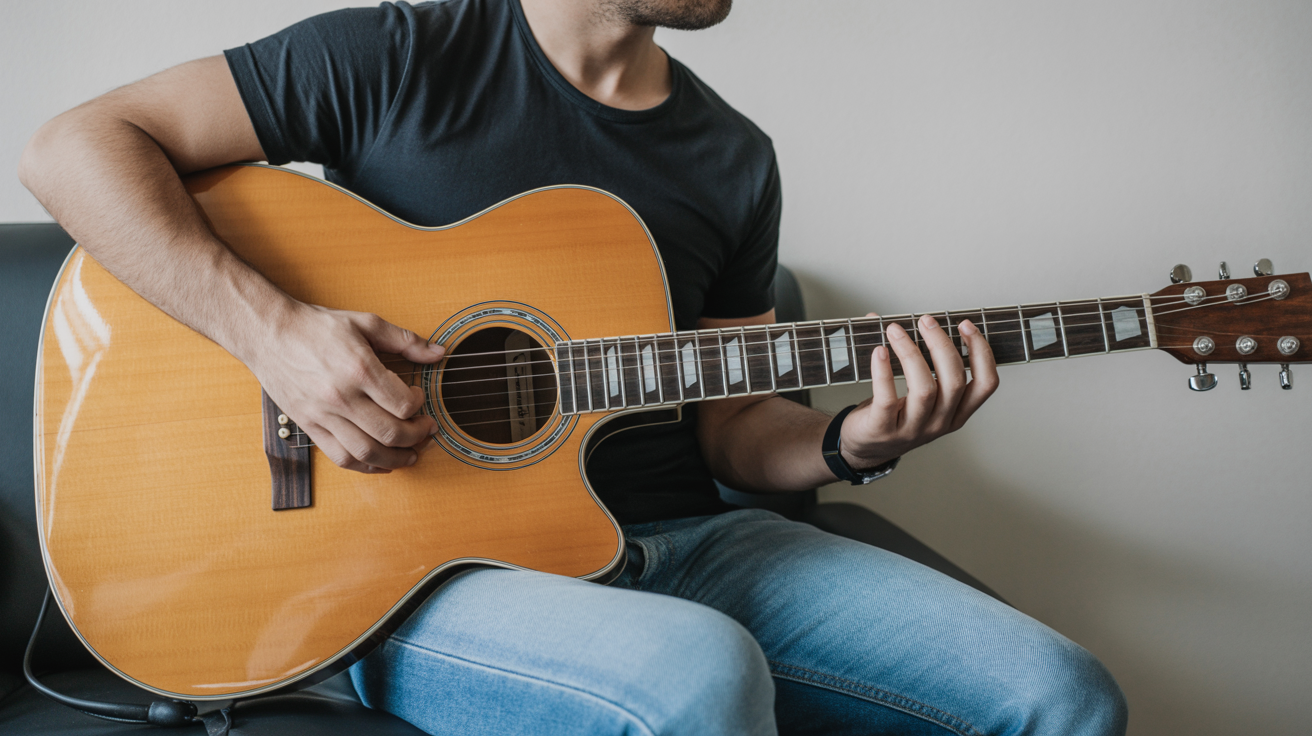
Most beginners feel stuck at some point. You've been playing for a few months and you're not sure if you're actually getting better or just going through the motions. That feeling is normal, and it has a straightforward fix: stop guessing and start measuring.
This guide gives you specific, practical ways to tell that you're improving, even when progress feels invisible.
Why Guitar Progress Is Hard to See
Progress on guitar is rarely dramatic from day to day. The skill builds slowly in layers: your fingers get stronger, chord shapes start to feel automatic, your ear gets sharper. None of that happens in a single session, which is why players who don't track anything often assume they're not improving even when they are.
The other issue is comparison. You hear a polished video of someone playing a song you love, and your own stumbling attempt feels miles away. That gap is real, but it's also meaningless as a measure of your personal progress. The only comparison that matters is where you are now versus where you were a month ago.
Four Ways to Measure Guitar Progress Concretely
Record Yourself Playing the Same Thing Twice
Pick one chord transition, one chord progression, or the intro to a song you're working on. Record a short video or voice memo today. Then record the same thing in two weeks or a month.
The difference is usually obvious. Notes ring more cleanly. The transitions happen faster. You hesitate less. When you can see and hear it yourself, the progress stops being abstract.
This is probably the single most useful tracking method available to a beginner. Your ears calibrate to your current level, so what sounds bad to you today will sound clearly better in the future recording.
Time Your Chord Transitions
Set a timer for one minute and count how many clean transitions you make between two chords, say G and C. Write the number down.
Run this test again in two weeks. A higher count means your muscle memory is developing. Even adding five clean transitions per minute over a month is real, measurable improvement.
This works best with the transitions you find hardest. If you can currently do 18 G-to-C changes per minute cleanly, getting to 26 is a concrete goal, not a vague hope.
Track Songs You Can Play Start to Finish
Keep a short list, even just a note on your phone. When you can play a song all the way through without stopping, add it to the list. Review it once a month.
A growing list is one of the clearest signs that things are clicking. Songs that felt impossible three months ago are now on the list. That's progress by any definition.
Notice What Doesn't Require Thinking Anymore
Early on, forming a G chord requires looking at your fingers, thinking about each string, and adjusting until it sounds right. After enough repetition, your hand just goes there.
That shift from conscious effort to automatic action is a major form of progress. Pay attention to which chord shapes, transitions, or strumming patterns no longer require conscious thought. As the automatic list grows, you have more mental space for the next challenge.
A Simple Progress Tracking Routine
You don't need an elaborate system. A basic notebook or a note on your phone works fine.
| What to Track | How Often | What to Record |
|---|---|---|
| Video of current song or exercise | Monthly | Date + what you played |
| Timed chord transitions | Every 2 weeks | Chord pair + count per minute |
| Songs completed | Ongoing | Song name + date |
| New skills that feel automatic | Monthly | Brief note |
Even 10 minutes per month reviewing these notes will give you a clearer picture than trying to assess progress from memory.
Setting Guitar Practice Goals That Help You Improve Faster
Vague goals ("get better at guitar") make it hard to measure anything. Specific goals give you a finish line.
Some examples of goals that work:
- Play the intro to "Wish You Were Here" at full speed by the end of the month.
- Get from 15 to 25 clean G-to-D transitions per minute in two weeks.
- Learn three songs I can play without stopping by the end of the quarter.
When you hit the goal, write it down and set a new one. This compounds over time in a way that open-ended "practice more" intentions don't.
If you need help structuring the time between goals, how to build a daily guitar practice routine that works covers how to break your sessions into useful chunks.
How Long Until You Actually Notice Progress?
Most beginners who practice a few days a week notice real improvements within four to six weeks. The changes in the first few weeks are often physical: your fingertips toughen up, your hand stops cramping, chord shapes start to feel more natural.
Musical progress tends to become obvious around months two and three. Transitions happen faster. Songs start to sound like songs. The moment you play something and think "that actually sounded decent" is a milestone worth marking.
The players who feel stuck are usually practicing without any specific goals and without any record of where they started. If you install even a minimal tracking habit now, you won't have to wonder later.
For guidance on how much time to put in, how long should beginners practice guitar each day breaks down what actually makes practice sessions effective versus just logging time.
And if part of what feels slow is your hands not cooperating, guitar finger exercises and warm-ups for beginners has targeted drills that speed up the physical side of development.
Frequently Asked Questions
How do I know if I'm improving at guitar if I can't hear it myself?
Record yourself. Your ears adjust to your current level, so live playing often sounds worse to you than it sounds to a listener or than it will sound on a recording you play back a month from now. A video or voice memo from several weeks ago is almost always a better measure than your daily impression.
How long does it take to measure guitar progress?
Two to four weeks is usually enough time to see a clear difference in timed chord transitions or recording quality. Day-to-day changes are too small to detect reliably. Monthly check-ins work well for most people.
What if I've been playing for months and feel like I haven't improved at all?
If you have no baseline recordings or written notes from when you started, you likely have improved but have nothing to compare against. Start now: record what you sound like today, time a chord transition, and check back in three weeks. Progress that seemed invisible often becomes clear the moment you have something to compare.
Should I use an app to track guitar progress?
An app can help if you find it motivating, but it's not necessary. A note on your phone with monthly recordings and a count from your timed transitions is enough information to see clear trends. The habit of checking matters more than the tool you use.
Is it normal to plateau on guitar?
Yes. Most players hit periods where improvement feels slow. These usually happen when your current practice routine has stopped challenging you. Adding one new, harder element, a new chord, a faster tempo, a new strumming pattern, tends to restart the visible progress.