Gear & Maintenance
How to Clean and Care for Your Guitar
Learn how to clean a guitar properly, care for the fretboard, and do basic maintenance that keeps your instrument playing well for years.
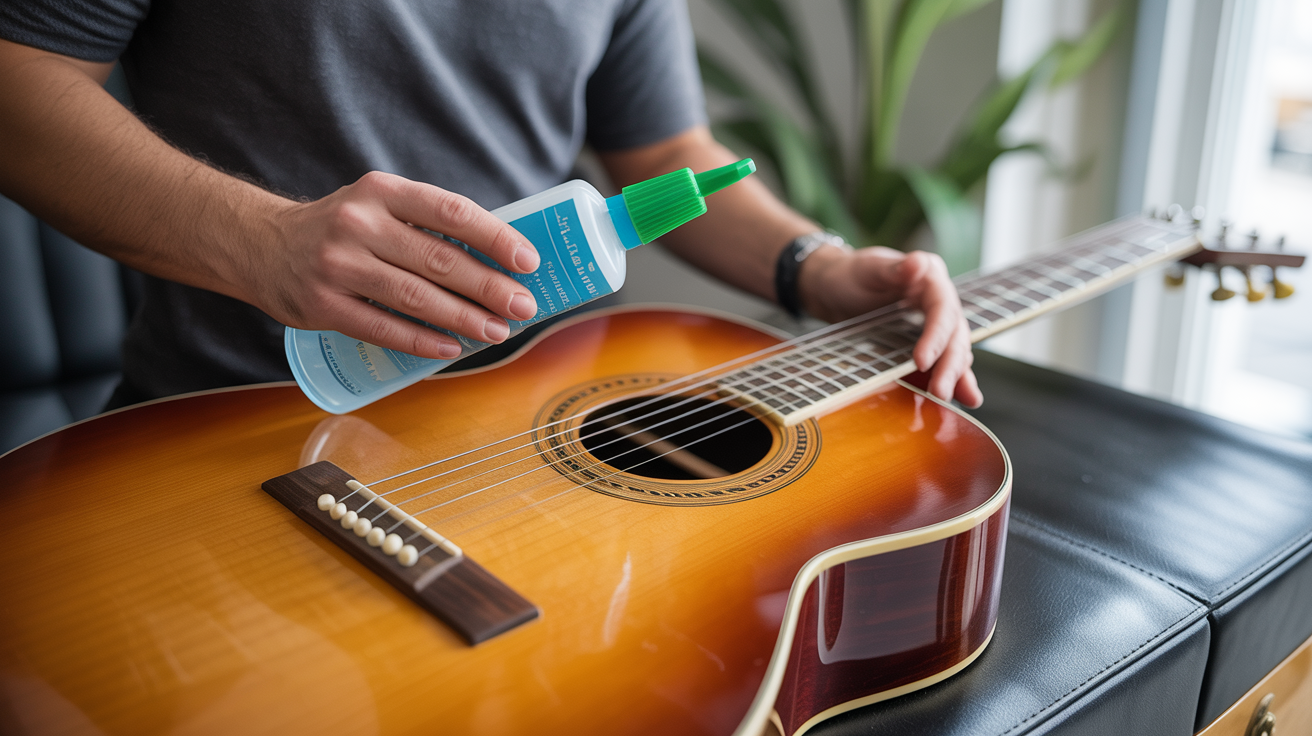
Cleaning a guitar takes about ten minutes and a few dollars worth of supplies. Wipe down the body and strings after each session, do a deeper clean every few months, and condition the fretboard once a year. That is the whole system. The sections below walk through each part in detail.
What You Need Before You Start
You do not need specialized gear to maintain a guitar. Most of what you need is already at home or costs very little at a music shop.
Supplies list:
- Soft, lint-free cloths (an old T-shirt or microfiber cloth works fine)
- Guitar polish or a slightly damp cloth for the body
- Fretboard conditioner (lemon oil for unfinished boards, or a product like Music Nomad F-ONE)
- String cleaner (optional but useful)
- A can of compressed air (optional, for hard-to-reach areas)
Avoid paper towels, they scratch finishes. Avoid furniture polish and generic wood conditioners, they contain silicone or chemicals that can cloud a guitar's finish or damage bare wood.
If you are not sure what finish your guitar has, look it up by model or ask at a music shop. Most acoustic guitars have a satin or gloss lacquer body and an unfinished (bare wood) fretboard. Most electrics are similar. Knowing this helps you choose the right cleaner.
How to Clean the Guitar Body
The body picks up fingerprints, sweat, and dust from every session. A quick wipe after playing prevents buildup.
After each session: Wipe the back, sides, and face of the guitar with a dry soft cloth. Thirty seconds is enough.
Every few months, do a deeper pass:
- Dampen a cloth very lightly with water or apply a small amount of guitar polish to it.
- Wipe the body in small sections, using gentle circular motions.
- Follow with a dry cloth to remove any residue.
- Pay attention to the area around the soundhole and along the neck joint, both tend to collect grime.
If your guitar has a gloss finish, a dedicated guitar polish keeps it looking clean and provides a light layer of protection. Satin-finish guitars should be wiped with a dry or barely damp cloth only. Polish on a satin finish leaves a blotchy sheen.
Cleaning the Fretboard
The fretboard needs different treatment from the body. On most guitars, it is bare or lightly oiled wood that absorbs sweat and dead skin with every session.
How to clean it properly:
- Remove all six strings so you have full access. This is also a good time to change your strings if they are overdue.
- Use a dry cloth to wipe each fret slot and the wood between frets.
- For heavier buildup, wrap a cloth around a credit card or flat pick and use it to scrape gently along the edges of each fret.
- Apply a small amount of fretboard conditioner to a cloth and rub it into each section of the board. Let it sit for a minute, then wipe away the excess.
Do not over-condition. Once a year is usually enough. Too much oil causes the wood to become soft and sticky over time.
Maple fretboards (common on Stratocaster-style guitars) usually have a gloss finish and should be wiped clean with a dry cloth only. They do not need conditioning.
Rosewood and ebony fretboards are bare wood and benefit from occasional conditioning with lemon oil or a purpose-made fretboard product.
Caring for the Strings
Strings corrode from sweat and oils left on them after playing. Corroded strings sound dull and feel rough under your fingers.
A quick wipe of the strings with a dry cloth after each session extends their life noticeably. Run the cloth under the strings as well, not just across the top.
String lubricants like GHS Fast Fret or similar products reduce finger squeak and slow corrosion. They are not necessary, but some players find them useful.
When strings start to sound dead or feel rough, they need replacing. For most beginners playing a few times a week, that is every six to eight weeks. For a full guide on doing this yourself, see how to change guitar strings step by step.
Storage and General Care
Where and how you store a guitar has a big effect on its condition over time.
Temperature and humidity: Wood expands and contracts with changes in humidity. Extreme dryness (below 45% relative humidity) causes wood to shrink, which can crack the body, raise fret ends, and cause the neck to shift. Keep the guitar away from heating vents, air conditioners, and direct sunlight.
If you live in a very dry climate, a small humidifier placed inside the case (like a Dampit or D'Addario Humidipak) protects the instrument.
Storage position: A guitar hanging on a wall hook or standing in a sturdy floor stand is fine for daily use. If you are storing it for more than a few weeks, use the case. A case also protects against knocks, dust, and temperature swings.
Strap buttons and tuning pegs: Check that tuning pegs are snug every few months. If they feel loose, they may need a small tightrope. Strap buttons can work themselves loose too, particularly if you use a strap frequently.
For a look at the accessories that genuinely help at this stage, the guide to guitar accessories beginners actually need covers what is worth buying and what is not.
A Simple Maintenance Schedule
| Task | Frequency |
|---|---|
| Wipe down body and strings | After every session |
| Deep clean body | Every 2-3 months |
| Clean fretboard | When changing strings |
| Condition fretboard (rosewood/ebony) | Once a year |
| Check tuning pegs and strap buttons | Every few months |
| Replace strings | Every 6-8 weeks (adjust to your use) |
Keeping your guitar in tune is also part of maintenance. Dirty strings and humidity changes both affect tuning stability.
Frequently Asked Questions
Can I use household cleaners on my guitar?
Avoid glass cleaner, furniture polish, and all-purpose sprays. Most contain chemicals that damage lacquer or strip oil from bare wood fretboards. A slightly damp cloth or a product made for guitars is the safe choice.
How do I know if my fretboard needs conditioning?
If the wood looks grey or chalky rather than a healthy medium-to-dark brown, or if it feels rough and dry, it is ready for conditioning. A small amount of lemon oil or fretboard conditioner will restore the color and feel in a few minutes.
Do I need to remove the strings to clean the guitar?
For a basic wipe-down, no. For a thorough fretboard cleaning and conditioning, yes. Removing the strings gives you full access to every fret slot and the wood between frets.
My guitar has gunk built up around the frets. What do I use?
A dry cloth wrapped around a flat pick or credit card scrapes away most buildup without scratching the frets. For stubborn deposits, a small amount of fretboard cleaner on a cloth works well. Avoid anything abrasive.
How often should I take my guitar for a professional setup?
Once a year is a reasonable baseline for most beginner and intermediate players. A setup adjusts the action, intonation, and neck relief, things that drift over time with changes in climate and string wear. A well-set-up guitar is noticeably easier to play.