Gear & Maintenance
Guitar Picks for Beginners: Thickness, Shape, and Material
Choose the right guitar pick as a beginner. Learn how thickness, shape, and material affect your tone and control, with clear guidance on where to start.

A guitar pick costs less than a dollar, but choosing the wrong one can make playing feel harder than it needs to be. If you have ever wondered what pick gauge guitar players actually use when they are learning, or why there are so many options at the shop, this guide will give you a clear answer fast and then explain the reasoning behind it.
Start here: For most beginners playing acoustic or electric guitar, a medium-thickness pick (around 0.60mm to 0.80mm) in a standard teardrop or triangle shape made from standard nylon or celluloid is a reliable starting point. From there, you can experiment as your playing develops.
At a Glance
- Medium thickness (0.60mm to 0.80mm) is the safest starting point for most beginners, covering both strumming and single-note playing.
- Thin picks (0.40mm to 0.60mm) flex more and feel forgiving for strumming, but produce a brighter, scratchier tone.
- Thick picks (0.80mm+) give more control and volume on individual notes, but are harder to strum cleanly at first.
- The standard teardrop shape is the easiest to learn on. Save Jazz III and specialty shapes for later.
- Material (nylon, celluloid, Delrin) affects feel and grip more than it affects your playing at a beginner level.
- Buy a variety pack and test a few thicknesses in one sitting. Your hands will tell you faster than any guide.
Why Pick Thickness Matters
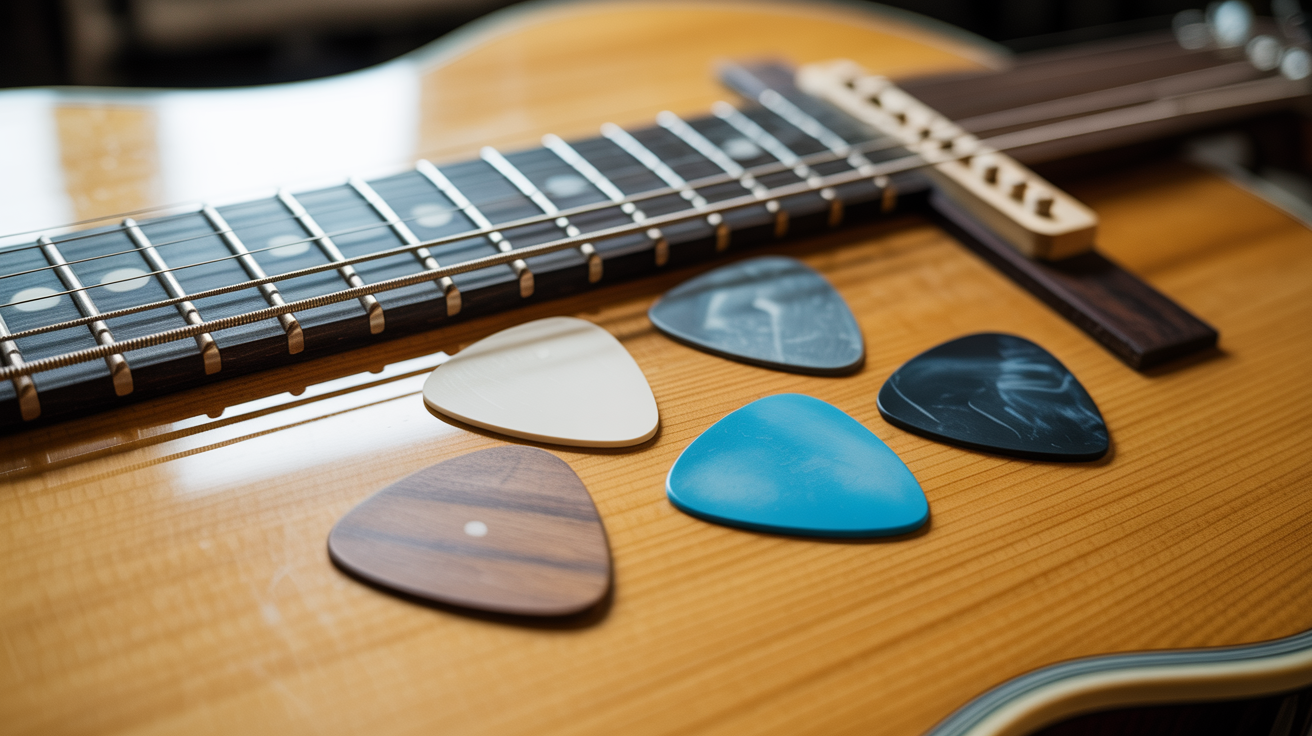
Thickness is the single most important pick variable for a beginner. It changes how the pick bends when it contacts the string, which affects both tone and control.
Light Picks (0.40mm to 0.60mm)
Thin picks flex a lot when they hit a string. This makes strumming chords feel easy and forgiving because the pick bends rather than catching. The downside is that thin picks produce a bright, slightly scratchy tone and can be harder to control when you want to pick individual notes. They also make a flappy, plastic-heavy sound that some players find distracting.
Good for: open chord strumming, acoustic rhythm playing. Worth knowing: they can slow down your picking accuracy over time if you rely on the flex to avoid developing a clean technique.
Medium Picks (0.60mm to 0.80mm)
Medium picks are where most beginners should land. They have just enough stiffness to give you feedback about your angle and attack, but they are not so rigid that they catch awkwardly on strings. The tone is balanced: not too bright, not too muddy. Medium picks work for strumming, light fingerpicking patterns, and single-note lines.
This is the best guitar pick thickness range for players who do not yet know what style they will focus on, because it covers the widest range of uses.
Heavy Picks (0.80mm and above)
Thick picks are stiff and precise. They transfer more of your picking motion directly to the string, which produces a fuller, louder tone on individual notes. They are harder to strum with at first because any angle error causes the pick to catch or click against strings. Most lead players and those who do a lot of single-note work eventually move toward heavier gauges.
Good for: electric guitar lead playing, picking accuracy work, players who want more volume and sustain per note.
A Worked Comparison: Same Chord, Three Thicknesses
To make the difference concrete, here's what happens when you strum a single open G chord with three different picks, using the same strumming motion and pressure:
| Pick thickness | Flex under a strum | Resulting sound | Effort to strum cleanly |
|---|---|---|---|
| 0.44mm (thin) | Bends noticeably, almost folds | Bright, jangly, slightly buzzy on fast strums | Very low, forgiving of a sloppy angle |
| 0.73mm (medium) | Bends slightly, springs back fast | Balanced, warm-ish with clear attack | Low to moderate, rewards a consistent angle |
| 1.14mm (heavy) | Barely bends | Full, punchy, more pronounced pick attack | Higher, an off angle causes catching or clicking |
This is why most teaching material defaults to medium: it's the widest margin for error while you're still developing a consistent strumming angle.
Pick Shape: Standard vs. Jazz vs. Triangle
Pick shape affects two things: how much of the tip contacts the string and how you hold it.
| Shape | What it looks like | Best for |
|---|---|---|
| Standard teardrop | The classic rounded point | All-around use, most comfortable for new players |
| Large triangle | Three usable corners, large surface | Strumming-focused players, good grip area |
| Jazz III / small | Pointed tip, compact body | Single-note precision, faster picking |
| Thumb pick | Fits over thumb | Fingerstyle players who also need a pick |
For most beginners, the standard teardrop shape is the right call. It feels natural in the hand, gives you a clear sense of where the tip is, and works for chord strumming and basic melody playing. Once you know your preference, trying other shapes is a cheap experiment. Historically, plectrum shapes and materials have varied enormously across instruments and eras. As the reference on plectra notes, even harpsichord builders debated quill versus leather picks for the sound difference, which is the same instinct that drives a guitarist trying five shapes to find the one that disappears in their hand.
Pick Material and How It Affects Feel
Most beginner picks are made from nylon or celluloid. Both are fine starting materials. Material choice has mattered to musicians for a long time: the article on the guitar pick notes that picks have been made from everything from tortoiseshell to metal to wood, and that the material changes the harmonic content of the attack, metal picks trend brighter and harmonically richer, wood picks trend warmer. Beginners don't need to chase any of that. It matters more once your ear is developed enough to hear the difference reliably.
Nylon grips slightly better when your fingers get warm, and the texture is consistent from pick to pick. It has a smooth, clean attack.
Celluloid has been the standard for decades. It produces a slightly warmer tone and often comes with a matte finish that helps with grip.
Beyond those two, you will also see:
- Acetal/Delrin: stiffer and longer-lasting than celluloid, good for players who go through picks quickly
- Tortex/ultem-style: very popular among intermediate players for their durability and consistent grip; often labeled by color to indicate thickness
- Wood or stone: novelty materials with distinctive tone but less practical for everyday use
For a beginner, the material difference is minor. Pick up a sample pack that includes a few thicknesses and try them all. Your hands will tell you more than any guide can.
How to Hold a Pick
No amount of pick research helps if you hold it badly. Two common beginner mistakes:
- Gripping too much of the pick so only a sliver of the tip sticks out. This limits your range of motion and makes the pick feel stiff and awkward.
- Holding too loosely so the pick rotates when it hits a string.
The right grip: rest the pick on the side of your index finger, roughly at the first joint. Press your thumb pad flat against it. About 3-5mm of the pick tip should extend past your thumb. Firm enough that it does not move when you strum, relaxed enough that your wrist stays loose.
If you find that your pick keeps rotating or dropping, try a pick with a textured center grip or a raised dot pattern. These are made specifically to solve that problem.
A useful sanity check: after ten minutes of strumming, look at your grip. If the pick has crept so far into your fist that almost nothing sticks out, or it's rotated so the point is no longer facing the strings, you're gripping too hard and compensating with tension elsewhere in your hand. Reset, loosen your grip slightly, and let the pick do the flexing instead of your fingers.
Once you have a pick you like, make sure your guitar is in tune before every practice session. A good-sounding pick on an out-of-tune guitar still sounds bad. See our guide on how to tune a guitar for a step-by-step walkthrough.
Other Accessories Worth Having Alongside Picks
Picks are a small part of the overall beginner gear picture. The accessories that actually move the needle for new players are a tuner, a capo, and a spare set of strings. Our guide to the guitar accessories beginners actually need covers each one without padding the list with things you do not need yet.
And when you do need to change those strings, knowing how to handle picks while you work on the headstock makes the job easier. See our full walkthrough on how to change guitar strings step by step.
Frequently Asked Questions
What pick gauge should a beginner use? Medium gauge picks, roughly 0.60mm to 0.80mm, are the most practical starting point. They work for both strumming and basic single-note playing, and they give you useful feedback without being too stiff or too floppy.
Does pick thickness affect tone? Yes, noticeably. Thinner picks produce a brighter, slightly scratchy sound and reduce sustain on individual notes. Thicker picks deliver a fuller, rounder tone with more attack. For rhythm playing the difference is subtle; for single-note lead lines it is more obvious.
Should I use a different pick for acoustic vs. electric guitar? Not necessarily. The same medium pick works on both. Some players prefer a thinner pick for acoustic strumming because the strings have higher tension and a thinner pick bends more naturally. On electric, where string tension is lower, a medium or slightly heavier pick often feels better for single-note work. Try both and see what fits your hand.
How do I stop dropping my pick? The two most common causes are holding too loosely and gripping too much surface area so the pick has room to twist. Try reducing the amount of pick extending past your thumb and pressing the thumb pad flat rather than angling the thumb tip. Picks with textured grip surfaces also help significantly.
How many picks should I buy? Buy a variety pack that includes thin, medium, and heavy options. They are cheap, and the fastest way to find your preference is to play with all three on the same day. Once you know what you like, keep five or six of that pick around. They disappear constantly.
Do more expensive picks actually play better? Not in any way that matters for a beginner. Price differences mostly come from material sourcing, printing, and novelty shapes rather than performance. A one-dollar Tortex pick and a boutique metal pick both do the same basic job. Spend your money on a variety pack across thicknesses before spending it on a premium single pick.
Can the wrong pick actually slow down my progress? It can, indirectly. A pick that's too thin lets you get away with a sloppy strumming angle because it flexes around your mistakes, which delays building clean technique. A pick that's too thick can frustrate a beginner into strumming harder than necessary to compensate for catching on strings. Medium thickness avoids both traps, which is the main reason it's the default recommendation here.